
Author: Konstantina Karatzoudi
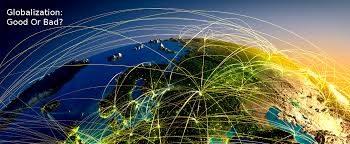
Globalization is reshaping the international environment and leading businesses into new territories. The new advanced technologies are the means which reduce the costs of global communication and increase the exposition to practices of other cultures. The new reality is characterized by the reduction of trade and investment barriers and the globalization that forces businesses to try to be more competitive to survive. This competition is intensified on a global scale as multinational companies from developed countries and emerging markets seek new customers and new opportunities. This new reality has transformed the way companies do business and affected cultures worldwide.
The core element of globalization is the expansion of the world trade and the enhancement of national competitiveness. This greater openness can in turn stimulate the foreign investments that can be a source of employment and promote the economic growth of developing countries as well as economic resilience and flexibility. As opportunities do not exist without risks, globalization of markets can also challenge the traditional market entry strategies, such as Foreign Direct Investments. A paper by IMF’s Research Department discusses about the effects of financial globalization. The findings support that countries must carefully weigh the benefits and risks of unfettered capital flows. It is possible that certain factors are likely to influence the effect of financial globalization on economic volatility and growth. Countries with sound macroeconomic policies, developed financial sectors and trade openness are more likely to gain from market liberalization and less likely to face financial crises.
The point here to make is that foreign direct investments are long-term projects and as such, risks are uncertain during the life of FDI and can substantially affect its performance. Examples of risks are country risks, default risks and exchange risks. In recent literature, FDI is assumed to behave as foreign portfolio investment and therefore, the exchange rate risks affect extensively the FDI, as they affect the revenues and cost structures of firms.
Although there are many risks associated with FDI, there are companies from emerging markets that buy up companies in other countries. The reason can be that emerging companies have suffered less during the economic downturn and have rebounded faster by taking advantage of their strengths and purchasing a wide range of businesses. Emerging economies want to move beyond the advantage of cheap labour and create organizations with the skill base found in western countries. These companies appear to hold many advantages in industrialized countries and can overcome many disadvantages, as they possess innovation processes and management systems, as well as sophisticated technologies and access to financial and human resources.
References
Aihajhouj, H.R. (2012). Foreign Direct Investment and Exchange Rate Risk. Scientific Journal of King Faisal University. Vol 3 No1.
Hirschler, B. (2011). Analysis: Emerging Market Companies Buy Up the World. Reuters.
International Monetary Fund (2008). Globalization: A Brief Overview. International Monetary Fund.
Wild, J.J. & Wild, K.L. (2012). International Business, The Challenges of Globalization. Pearson, 6th edition,
 Future's Management